
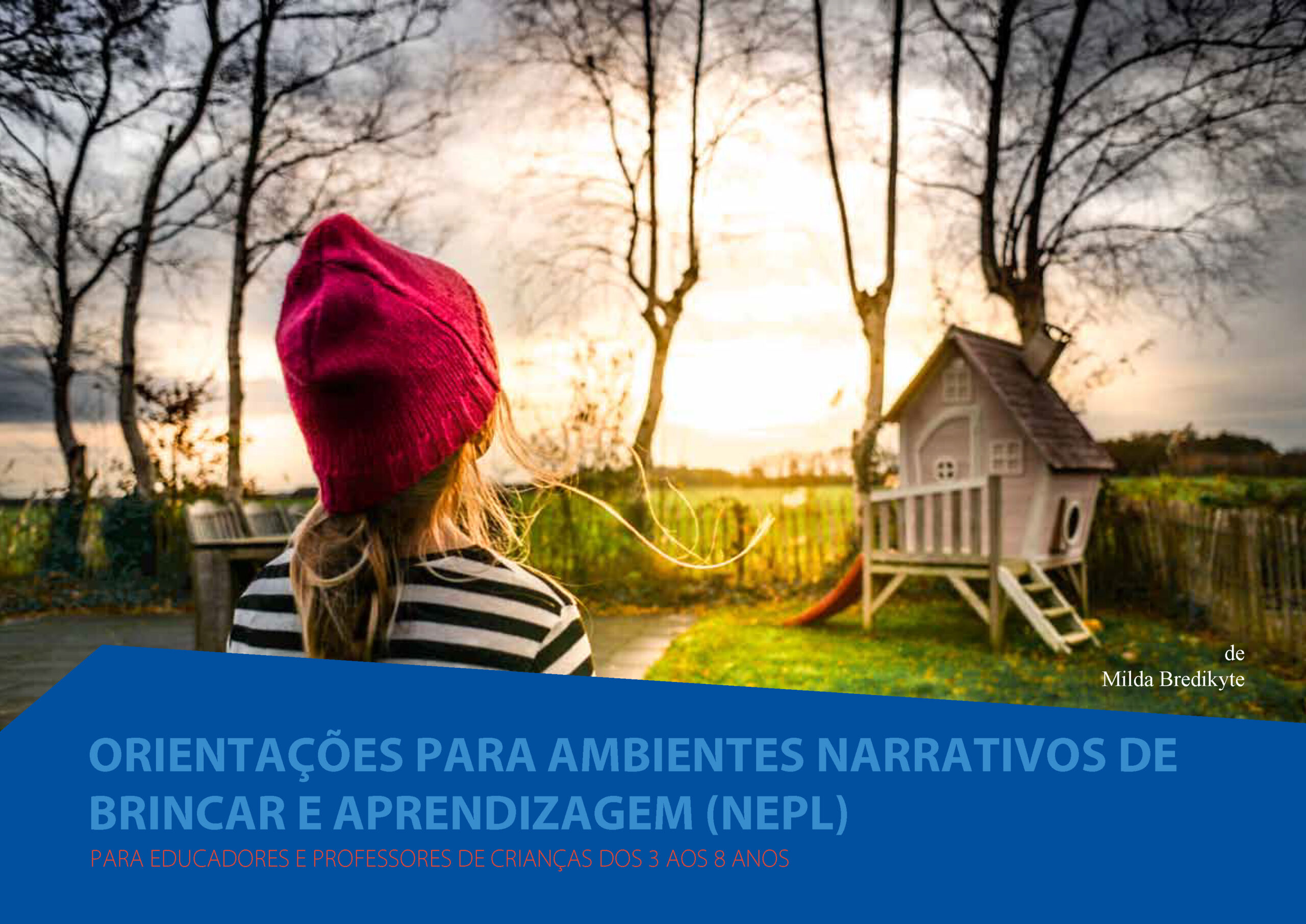
NEPL – Guidelines for Narrative Play and Learning Environments
FOR EDUCATORS AND TEACHERS OF CHILDREN AGED 3 TO 8
The brochure *Narrative Environments for Play and Learning (NEPL) Guidelines* presents an innovative pedagogical approach centered on narrative play as a driver of development and learning in early childhood education and the early years of schooling.
Based on international research and developed as part of an Erasmus+ project, this proposal integrates play, storytelling, and learning through the creation of “shared imaginary worlds” between children and adults. In these contexts, educators and teachers take on an active role, participating in play and co-creating stories with the children, thereby fostering meaningful and emotionally engaging experiences.
The document highlights that play—especially symbolic and narrative play—is essential for the development of imagination, self-regulation, creativity, and social skills, arguing that early formal learning cannot replace the foundational value of play.
In addition to the theoretical framework, the guidelines offer a set of practical strategies for implementing this approach in educational contexts, including the role of the adult, the selection of stories, the organization of the environment, and the planning of narrative play projects over time.
Taken as a whole, this publication is a valuable resource for professionals seeking more participatory, creative, and child-centered teaching practices, emphasizing play as an essential language of childhood.
About the Author
Milda Bredikyte is a researcher and professor in the field of early childhood education, recognized for her work on narrative play and child development. She coordinated and edited the NEPL guidelines, integrating theoretical research and pedagogical practice developed in various European countries.
Her work draws inspiration from authors such as Vygotsky and Bruner, focusing on the relationship between imagination, narrative, and learning, and has contributed to the development of innovative pedagogical approaches based on the creation of “playworlds”—contexts for collaborative play between adults and children.
She has contributed to international projects and to the training of educators and teachers, promoting practices that emphasize play as a central element of human development.
Related
Related Products
-
OCEPE – Curriculum Guidelines for Preschool Education (2016) (11€)
Buy €18.00 -

Catrapum, here's another one! (9€)
Rosa Montez
Buy €16.00
Sofia Ambrósio -

Intervening Early and Taking the Time in the First Years of Life (10€)
Ana Paula Caeiro
Buy €16.50
Isabel Tomázio Correia -
Playing Everywhere (2nd ed.) (15€)
Carlos Neto & Frederico Lopes
Buy €25.00