
Select the number of tickets and fill in the information.
€10.00
Sold Out
March 21, 2026
- 08:00
Opening of the Secretariat
- 9:15
Opening Session
- 09:45
Opening Lecture – Assessment of Reading Fluency – Professor Alexandre Homem Cristo, Deputy Secretary of State for Education(to be confirmed)
- 10:15
Coffee break
- 10:45
Roundtable Discussion – Reading Fluency: Challenges and Approaches
Professor Josiane Toledo, Ph.D. in Education—specialist in linguistics applied to the teaching of the mother tongue, CAEd—Center for Public Policy and Educational Evaluation, Brazil
Professor Fernanda Leopoldina Viana, co-author of the reading fluency program “Ouvintes Sortudos,” retired professor, Institute of Education, University of Minho
Professor Nuno Crato, Research Professor at ISEG, President of Iniciativa Educação, former Minister of Education
Mediation: Professor José António Costa, Assistant Professor, Polytechnic Institute of Porto (to be confirmed)
- 11:45
Conference – The Brazilian Experience in Assessing Fluency
Professors Josiane Toledo, Juliana Gomes, and Wagner Rezende, Center for Public Policy and Educational Evaluation, Federal University of Juiz de Fora – CAEd/UFJF
- 12:30
Lunch (on the house)
- 14:00
Presentation of Best Practices (School Experiences in the Area of Reading Literacy/Fluency)
- 15:45
Conference – Read Well to Learn Better: From Emerging Literacy to Reading Fluency
Professor Miguel Borges, scientific coordinator of the Sparkle, Transforming Education (APEI) program and co-author of the reading fluency program “Ouvintes Sortudos”
- 16:30
Project Babell
Lello Bookstore & Porto City Hall
- 17:00
Closing Session
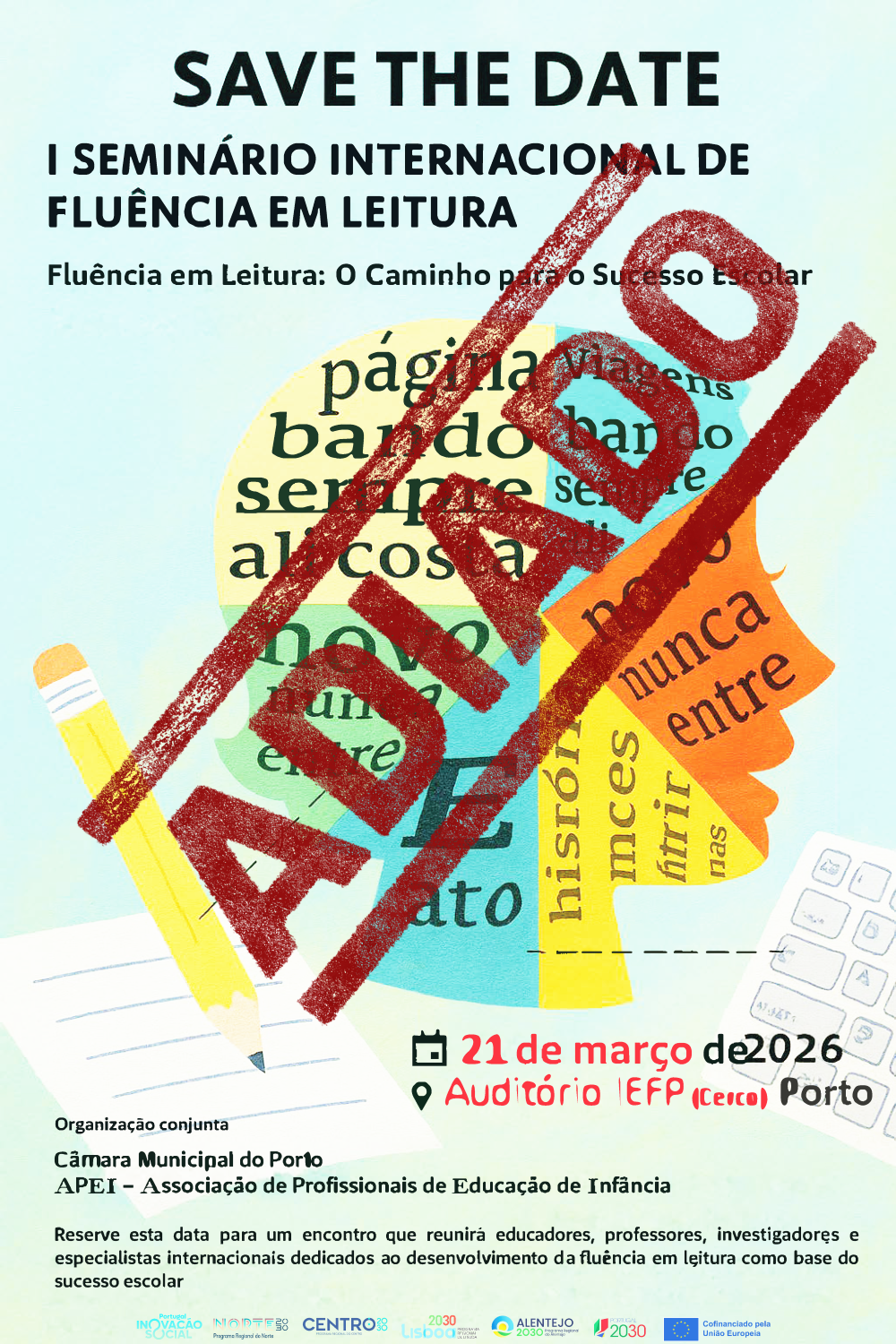
Through a partnership between APEI and the Porto City Council, the International Seminar “Reading Fluency: The Path to Academic Success – International Dialogues to Strengthen Teaching, Assessment, and Intervention Practices in the Portuguese Language” will take place on March 21, 2026, in the auditorium of the Institute of Employment and Vocational Training (Cerco) in Porto.
This initiative represents a particularly important opportunity to strengthen scientific knowledge about reading fluency and its decisive role in academic success, fostering links between research, assessment, and evidence-based teaching practices. At the same time, the seminar is fully aligned with the MECI’s priorities and guidelines for improving learning, promoting literacy, and consolidating effective and monitored educational responses that have a direct impact on children’s academic progress.
The program will feature Alexandre Homem Cristo, Josiane Toledo, Fernanda Leopoldina Viana, Nuno Crato, José António Costa, Juliana Gomes, Wagner Rezende, and Miguel Borges, and will include lectures, a roundtable discussion, the sharing of best practices, and the presentation of the Babell Project (Livraria Lello & Porto City Council).
This seminar will be accredited as a Short-Term Training Course (ACD), 6 hours, pursuant to Order No. 5741/2015, dated May 29
Registration includes:
- Folder containing documentation
- Coffee break
- Lunch
- Certificate of Attendance (ACD)
PROGRAM
-
Alexandre Homem Cristo, Deputy Secretary of State for Education
Bachelor's degree in Political Science (UCP) and a master's degree in Comparative Politics (ICS-UL).
Advanced training in Public Policy Analysis (London School of Economics).
Elected to the Assembly of the Republic in 2024.
He has coordinated educational innovation projects at the international and national levels, particularly by combining artificial intelligence with the assessment of reading skills among elementary school students.
He served as a National Education Advisor and a parliamentary aide.
He was a member of the SEDES Coordinating Council.
He has published several works on public education policy.
Deputy Secretary of State for Education in the 24th and 25th Constitutional Governments
-
Josiane Toledo, CAEd - Center for Public Policy and Educational Evaluation
Josiane Toledo Ferreira SilvaShe holds a Ph.D. in Education from the Pontifical Catholic University of Rio de Janeiro (PUC-Rio), with a sandwich program at Université Paris-Nord – Paris 13, a master’s degree in Language and Literature from the Center for Higher Education in Juiz de Fora, and a bachelor’s degree in Language and Literature—Portuguese and French and their respective literatures—from the Federal University of Juiz de Fora. She currently serves as Supervisor of Correction for Constructed-Response Items and Reading Fluency at CAEd/UFJF. She is a member of the working group on assessment accessibility in the FLIP+ e-assessment community, representing the Center for Public Policy and Educational Assessment (CAEd/UFJF). -
Fernanda Leopoldina Viana, Retired Professor at the Institute of Education of the University of Minho
Fernanda Leopoldina Parente Viana. She earned her Ph.D. in Psychology in 1998 from the University of Minho, her Ph.D. in Psychology in 1998 from the University of Minho, her Master’s degree in Educational Psychology in 1993 from the University of Minho, and her Bachelor’s degree in Psychology in 1980 from the University of Porto. She was an associate professor at the Institute of Education, University of Minho, and served as Director and Deputy Director of the Center for Research in Child Studies. Retired since November 2019, she is an external research fellow at the Center for Research in Child Studies.
-

Nuno Crato, Professor and Researcher at ISEG, President of Iniciativa Educação
Nuno Crato, GCIH, GCIP, professor and researcher in mathematics and statistics at Cemapre, ISEG, University of Lisbon; member of the French government’s Scientific Council for National Education (CSEN); visiting scientist at the European Joint Research Center (JRC) in Italy; currently leads the Education Initiative, an organization focused on primary and secondary education.
He served as president of the Portuguese Mathematical Society (2004–2010), president of Taguspark (2010–2011), and Minister of Education and Science (2011–2015).
He has published several works reflecting on his experience as a minister, notably “Everything starts with the curriculum,” ResearchED 4, February 2019; “Curriculum and Education Reforms in Portugal: An Analysis on Why and How Students’ Knowledge and Skills Improved,” in F. Reimers (Ed.), *Audacious Education Purposes*, Springer 2019; and “Math Curriculum Matters: Statistical Evidence and the Portuguese Experience,” *European Mathematical Society Magazine* 124, 49–56.
He recently published *Aprender* (2025, Lisbon, FFMS) and *Apología del Libro de Texto: Cómo Escribir, Elegir y Utilizar un Buen Manual* (2024, Madrid, Narcea); he co-authored *Developing Curriculum for Deep Thinking – The Knowledge Revival* (Springer 2025); and he co-edited *Improving National Education Systems After COVID-19: Moving Forward After PIRLS 2021 and PISA 2022 (Springer 2024), edited *Improving a Country’s Education: PISA 2018 Results in 10 Countries* (Springer 2021), and co-edited *Data-Driven Policy Impact Evaluation* (Springer 2019).
A science communicator and education advocate, some of his books have been published in various languages and countries, including the United Kingdom, Spain, Italy, and Brazil, notably *A Matemática das Coisas* (SPM/Gradiva 2008) and *Figuring It Out* (Springer 2010). For his work, he has received awards from the European Mathematical Society (2003) and the European Commission (2007). He was honored with the title of Commander (2008) and Grand Cross of the Order of Infante D. Henrique (2016), as well as the Grand Cross of the Order of Public Instruction (2022). -

José António Costa, Assistant Professor, Polytechnic Institute of Porto
José António Costa completed his PhD in Language Didactics (Language Sciences) in 2016 at the University of Porto (Faculty of Arts). He earned a master’s degree in Linguistics in 2011 from the University of Porto, completed a postgraduate course in Linguistics and Language Teaching (2002) at the University of Porto, and received a bachelor’s degree in Modern Languages and Literatures (Portuguese/French) from the University of Porto in 1995. He is an Associate Professor at the School of Education of the Polytechnic Institute of Porto, where he coordinates the Master’s program in Teaching in Elementary School and in Portuguese Language, History, and Geography at the 2nd Cycle of Basic Education, as well as the Master’s program in Portuguese Language Didactics in the Digital Age. He heads the Department of Language Sciences and Literature and is also a member of the Master’s Committee for Preschool Education and Elementary School Teaching. He has published several articles in journals and authored book chapters. His work spans the fields of Social Sciences—with an emphasis on Educational Sciences—and the Humanities, primarily Linguistics and Didactics. His curriculum vitae frequently includes terms related to Historical Linguistics, language teaching, the French language, linguistic and cultural varieties of Portuguese, orthography, grammar instruction, Educational Sciences, language didactics, language acquisition, and physical and digital teaching resources.
-

Juliana Gomes, Center for Public Policy and Educational Evaluation (CAEd/UFJF)
She holds a bachelor’s degree in Language and Literature, a specialization in Literary Studies, and is currently pursuing a graduate degree in Artificial Intelligence and Educational Technologies. As an Assessment Tool Analyst at the CAEd Foundation, she also has 15 years of experience teaching Portuguese Language and Literature in the Juiz de Fora Municipal School System, as well as experience in the field of distance education.
-
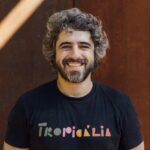
Wagner Rezende, Center for Public Policy and Educational Evaluation, Federal University of Juiz de Fora - CAEd/UFJF
Wagner Silveira RezendePh.D. in Social Sciences and Education from the Federal University of Juiz de Fora (UFJF). Professor of Sociology at UFJF. Director of CAEd/UFJF. Coordinator of the Graduate Program in Management and Evaluation of Public Education (PPGP/UFJF/CAEd). -
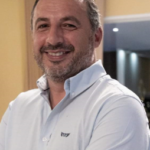
Miguel Borges, scientific coordinator of the Sparkle, Transforming Education program (APEI)
Miguel Borgeshas been a teacher in the 1st cycle of basic education (CEB) since 1997 (110); he is currently a teacher of mathematics and natural sciences in the 2nd cycle of basic education (CEB) (230), and holds a Ph.D. in Child Studies, with a specialization in developmental psychology and education.He is the author of school textbooks and numerous study guides, and has already published a significant number of children’s books, some of which have been recommended by the National Reading Program.In addition to being deeply knowledgeable about educational dynamics and professional cultures in elementary school, he is a specialist in the field of literacy, having served as a trainer for the PNEP (National Program for the Teaching of Portuguese) and as scientific coordinator of the PIPL (Integrated Program for the Promotion of Literacy).
He is currently the coordinator of the Sparkle – Transforming Education project, a literacy initiative funded by Portugal Inovação Social/Parcerias para a Inovação Social. Sparkleis an educational intervention project based on scientific evidence from the field of reading science, focused on developingemerging literacyskillsin preschoolandearly literacy skillsin the 1st grade. It promotes the integration of research into teaching practices, supporting educators and teachers in implementing effective and systematic strategies, thereby contributing to improving the quality of learning and to the early prevention of reading difficulties.
-
-
Accredited as a short-term activity (6 hours), pursuant to Order No. 5741/2015, dated May 29