
Select the number of tickets and fill in the information.
€50.00
14 in stock
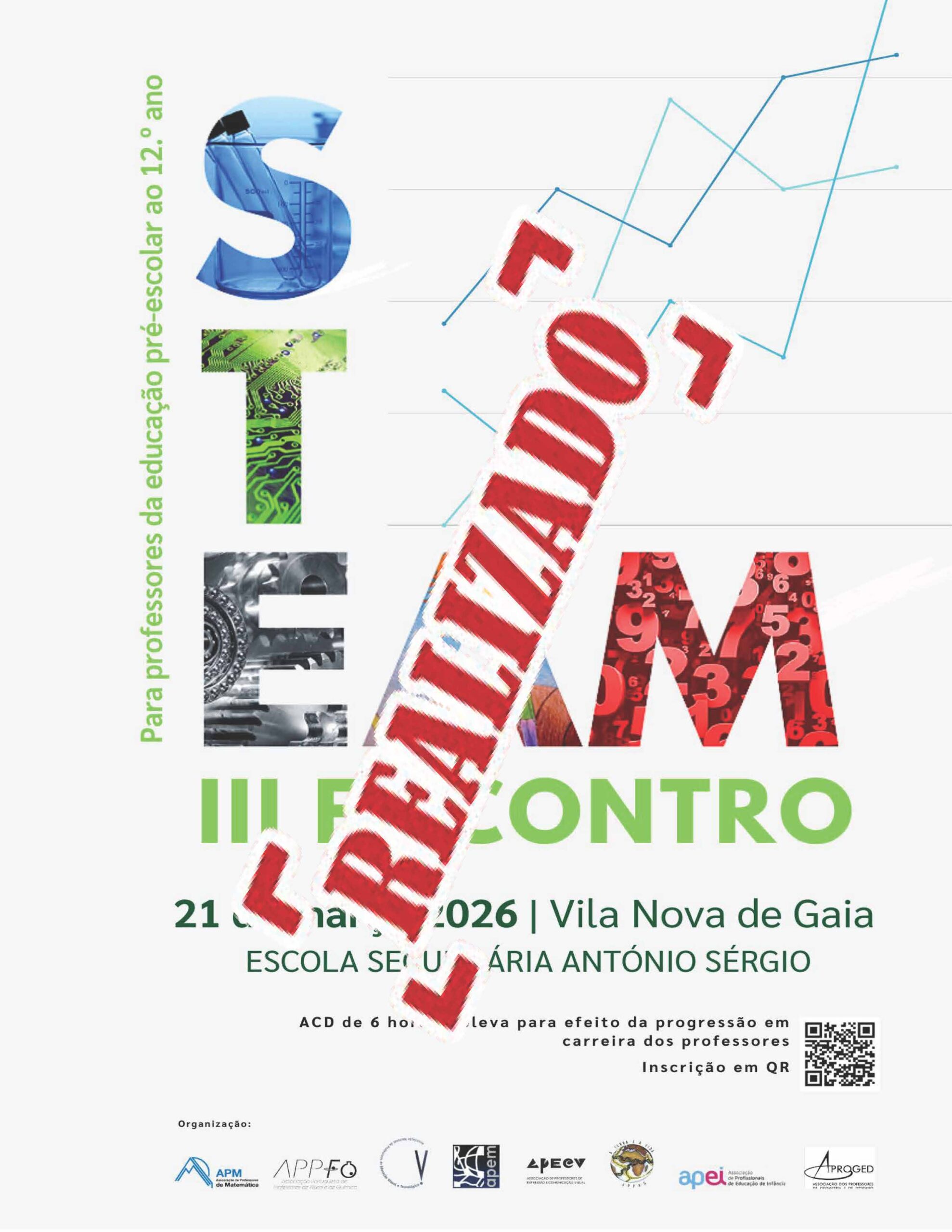
March 21, 2026
REGISTRATION FOR THE SEMINAR CLOSES ON MARCH 15
- 8:15 a.m. - Secretariat Opens
- 9:00 a.m. - Opening session
APECV
António Sérgio High School
Vila Nova de Gaia City Council
- 9:15 a.m. - First Opening Session
Cristina Cusenza, Associate Project Officer, Culture and Education Intersectoral Program, Cultural Policies and Development Entity, Culture Sector, UNESCO (to be confirmed)
- 10:00 a.m. - Coffee break
Coffee break
- 10:30 a.m. - Morning workshops
- Workshop 01 – ARTMAT | Kandinsky’s Triangles (groups 110, 230, 240, 600)
- Workshop 02 – STEM Bees: Hands-on and digital materials for exploring the life of bees (groups 110, 230)
- Workshop 03 –Geometric Models Made of Bamboo (Groups 600, 240, 500, 530)
- Workshop 04 – Drawing Outside the Plane: The Problem of the Right Triangle in Spherical Geometry (groups 600, 240, 500, 530)
- Workshop 05 – Music with Numbers (groups 100, 110, 250, 910, M28, and M32)
- Workshop 06 – Ecoprint – Connections Between Biology, Chemistry, and the Visual Arts(groups 510, 520, 600)
- Workshop 07 – Waves/Earthquakes – Geology and Physics on the Same Wavelength! (groups 510 and 520)
- Workshop 08 – Exploring LED Resources – Device Programming (Groups 500 and 510)
- Workshop 09 – Mathematics in the Early Years: From Problem Solving to Creativity (groups 100 and 110)
- Workshop 10– A Piece of Heaven Inside the Classroom: The Handcrafted Planetarium as a Teaching Resource in Preschool and Early Elementary Education (groups 100, 110, 120, and 910)
- Workshop 11– Passarada: Transdisciplinary Dialogues (Elementary and Secondary Education)
- Workshop 01 – ARTMAT | Kandinsky’s Triangles (groups 110, 230, 240, 600)
- 12:30 p.m. - Lunch (on the house)
Lunch (on the house)
- 2:30 p.m. - Afternoon workshops
- Workshop 01 – ARTMAT | Kandinsky’s Triangles (groups 110, 230, 240, 600)
- Workshop 02 – STEM Bees: Hands-on and digital materials for exploring the life of bees (groups 110, 230)
- Workshop 03 –Geometric Models Made of Bamboo (Groups 600, 240, 500, 530)
- Workshop 04 – Drawing Outside the Plane: The Problem of the Right Triangle in Spherical Geometry (groups 600, 240, 500, 530)
- Workshop 05 – Music with Numbers (groups 100, 110, 250, 910, M28, and M32)
- Workshop 06 – Ecoprint – Connections Between Biology, Chemistry, and the Visual Arts(groups 510, 520, 600)
- Workshop 07 – Waves/Earthquakes – Geology and Physics on the Same Wavelength! (groups 510 and 520)
- Workshop 08 – Exploring LED Resources – Device Programming (Groups 500 and 510)
- Workshop 09 – Mathematics in the Early Years: From Problem Solving to Creativity (groups 100 and 110)
- Workshop 10– A Piece of Heaven Inside the Classroom: The Handcrafted Planetarium as a Teaching Resource in Preschool and Early Elementary Education (groups 100, 110, 120, and 910)
- Workshop 11– Passarada: Transdisciplinary Dialogues (Elementary and Secondary Education)
- Workshop 01 – ARTMAT | Kandinsky’s Triangles (groups 110, 230, 240, 600)
- 4:00 p.m. - Closing Ceremony
"Recôndita Harmonia," Professor Carvalho Rodrigues, University of Beira Baixa
- 5:15 p.m. - Closing Ceremony and Cultural Performance
- ORGANIZATION:
- SUPPORT:
Registration for the seminar includes:
- Coffee break
- Lunch
- Folder containing seminar materials
- Certificate (ACD)
-

Fernando Carvalho Rodrigues
Fernando Carvalho Rodrigues earned a bachelor’s degree in Physics from the Faculty of Sciences at the University of Lisbon (1969) and received his Ph.D. in Electrical Engineering (1974) from the University of Liverpool. He was a Visiting Full Professor at the Instituto Superior Técnico (1986–1996), a Full Professor and Dean of the Faculty of Engineering Sciences at Universidade Independente and its Vice Rector for Research (1995–2005), and Coordinator of the Technology Research Area at the IADE School of Design – Institute of Visual Arts, Design, and Marketing (2012–2016), where he is Professor Emeritus. He contributed to the establishment of the University of Beira Interior (UBI), serving successively as a member of the Scientific Councils of the Polytechnic Institute of Covilhã, the University Institute of Beira Interior, and UBI, from which he received an honorary doctorate (1995).
He has distinguished himself in the fields of optics, optoelectronics, and information theory, and led the PoSAT consortium, which launched Portugal’s first satellite in 1993. He has authored approximately two hundred international publications and seven books published in Portugal, the U.S., and the Russian Federation, covering topics ranging from laser safety to mathematical models of combat and reflections on the future of technology. He holds six patents and has advised 16 doctoral students.
He served as Director of NATO’s Science Program (1999–2012), a member of EuroDefense Portugal (1998–2012), Vice President of the Strategic Council of EMPORDEF—Portuguese Defense Company (1997–1999), and the first Portuguese coordinator for the Eureka project (1984–1985). He is a founding member of the Portuguese Physical Society (1976) and a member of various scientific societies and academies in Portugal, the United States, the Russian Federation, and internationally. He was awarded the Pfizer Prize (1977) and the Gulbenkian Prize for Science and Technology (1978 and 1982). He received the Albert J. Myer Achievement Award (1996), the Commendation of the Military Order of Santiago da Espada (1992), and the Medal of Scientific Merit (2023) awarded by the MCTES. -
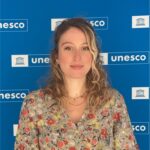
Cristina Cusenza
Cristina Cusenza, Associate Project Officer, Culture and Education Intersectoral Program, Cultural Policies and Development Entity, Culture Sector, UNESCO (to be confirmed)
Anthropologist and cultural professional with experience in the fields of cultural policy and development, currently contributing to the coordination of UNESCO’s Intersectoral Team on Culture and Education at UNESCO Headquarters, in line with Intersectoral Program 1: Learning for Diversity. I was previously based in Nairobi, Kenya, at the UNESCO Regional Office for Eastern Africa, where I provided technical assistance to thirteen countries to implement measures to preserve their cultural and natural heritage, safeguard intangible cultural heritage practices and museum collections, and promote dynamic cultural sectors through policy support, capacity building, and partnership development—including in the context of emergencies. I also contributed to the implementation of various UNESCO projects aimed at promoting the rights and linguistic and cultural heritage of Indigenous Peoples, as well as initiatives supporting countries in advancing peace and human rights education.
UNESCO Framework for Culture and Arts Education: https://www.unesco.org/en/culture-education
UNESCO’s Work on Culture and Education: https://www.unesco.org/en/culture-education?hub=71580
-
Workshop 01 - ARTMAT | Kandinsky's Triangles (groups 110, 230, 240, 600)
Carlos Gomes (APEVT) and Renata Carvalho (APM)
The objective of this session is to familiarize participants with teaching methodologies based on active strategies—which can be implemented in the classroom—that integrate learning in mathematics and the visual arts, providing opportunities for exploration and mastery of the expressive use of techniques, as well as opportunities for mathematical analysis and reasoning regarding numerical and geometric relationships, spatial reasoning, and geometric modeling to solve problems.
During the session, two challenges inspired by the works of Wassily Kandinsky will be presented that involve, from a mathematical perspective: recognizing, composing, and decomposing shapes and figures on a plane, as well as geometric vocabulary that includes the circle, semicircle, angle, and straight lines, etc.; identifying, representing, classifying, and constructing triangles; using the concept of perimeter and relating the measurement of perimeter to the possibilities for constructing triangles and the properties of numbers; and relating knowledge about measurement (perimeter), multiples of 3, and divisibility by 3. From a visual arts perspective, these challenges promote appreciation, contextualization, and experimentation and stimulate the perception and organization of two-dimensional space with a view toward creating a personalized composition inspired by the structural elements of the artist’s work. A composition can be an interplay of relationships between shapes, color, movement, contrast, etc. These explorations can convey sensations, harmony, freshness, or disorder, depending on the relationships established between the parts that make up the work.
-
Workshop 02 - STEM Bees: Hands-on and digital materials for exploring the life of bees (groups 110, 230)
Neusa Branco and Bento Cavadas, Santarém School of Education, Santarém Polytechnic Institute
In this hands-on session, a project proposal titled “STEM Bees” will be presented and discussed. This interdisciplinary proposal explores connections between mathematics and the sciences, promotes the use of technology and hands-on materials, and fosters the development of cross-curricular skills. The activity focuses on analyzing the characteristics of the cells in a honeycomb produced by bees, a structure that offers numerous opportunities for an interdisciplinary approach. Throughout the session, participants will use physical and digital materials to formulate and test conjectures and models. In the first part, they will complete tasks to identify the advantages of the hexagonal shape of the cells, compared to other regular shapes. In the second part, they will explore some aspects of the three-dimensional shape of the cells to gain a better understanding of the honeycomb’s structure. The third part will be dedicated to an activity using simple robotic objects that explores how bees communicate with one another about a food source they have detected outside the hive. At the end of the session, there will be a discussion on how the proposed tasks can be applied to the participants’ own contexts and the potential of this work for students’ learning in mathematics and science.
-
Workshop 03 – Geometric Models Made of Bamboo (Groups 600, 240, 500, 530)
Luís Mateus (APROGED) and Pedro Macias Marques (APM)
To study the symmetries of certain geometric shapes using three-dimensional models made from bamboo canes and their corresponding graphical representations.
Methodology:
- Following an introduction to geometric shapes and transformations, the session will continue with the construction of modular bamboo structures.
- The modular shapes created in the previous phase will be assembled to form three-dimensional shapes. Four groups of five participants should be formed. Each group will arrange the modular shapes to create a pyramid.
- In this part of the session, participants are asked to create a set of geometric drawings using the medium of their choice (analog or digital) that best convey the symmetries of the composite shapes they have constructed.
- After creating these drawings, students should conduct a brief investigation into the symmetries of these shapes. This can be done by identifying, in the drawings, the centers (axes) of rotational symmetry, axes (planes) of reflection symmetry, and the center (if any) of radial symmetry. At the end, the concept of a symmetry group can be introduced. And look for other mathematical concepts that may arise in an unexpectedly.
-
Workshop 04 - Drawing Outside the Plane: The Problem of the Right Triangle in Spherical Geometry (groups 600, 240, 500, 530)
Helena Mena Matos, University of Porto, Department of Drawing, Faculty of Fine Arts
Vasco Cardoso, Department of Mathematics, Faculty of Sciences
This workshop was designed with the goals of creating an experimental environment to explore concepts and results in spherical geometry through drawing-based activities, and to demonstrate to teachers in the 3rd Cycle of Basic Education and Secondary Education the feasibility of this interdisciplinary experience—and similar ones—in a classroom setting.
The topic is the concept of a right triangle on the surface of a sphere, which is essential for stating the spherical Pythagorean theorem. Generalizing a right triangle in the plane leads to discrepancies between right triangles in the plane and in spherical geometry. The task is to explore alternative definitions of a right triangle on the sphere that align more closely with their equivalents in the Euclidean plane. To this end, the proposed exploration is based on activities that engage spatial reasoning through drawing.
The workshop begins with learning how to draw a sphere, introducing the concept of projection using a model derived from the study of conic sections. Next, we explore some fundamental principles of spherical geometry using three scales, three drawing tools, and three different surfaces: a Lénárt sphere, paper, and a board. Using the same tools, participants then move on to exploring the spherical right triangle. Thus, the topic of projections—so prevalent in drawing—will be a cross-cutting theme throughout the entire duration of the activity. (adapted from a forthcoming publication; an i2ADS edition)
-
Workshop 05 – Music with Numbers (groups 100, 110, 250, 910, M28, and M32)
Manuela Encarnação and Liliana Eira, APEM
In this workshop, we will explore the fascinating relationship between music and mathematics, highlighting how these two fields of knowledge are interconnected and can be integrated in an enriching way during the early years of schooling.
The educational program does not prioritize either subject area but rather promotes complementarity between the two. Music and mathematics, due to their intrinsically interconnected nature, have enormous potential to work together to foster the development of musical and mathematical literacy, enabling students to master the fundamental and foundational concepts of each discipline.
Throughout the session, we will focus on topics such as Numbers, Algebra, Timbre, Rhythm, Pitch, and Form, using common teaching strategies that encourage experimentation, interpretation, and reflection. This will be a space to explore and develop innovative and inclusive approaches, inspiring practices that combine musical creativity with mathematical logic in an educational context.
-
Workshop 06 - Ecoprint - Connections Between Biology, Chemistry, and the Visual Arts (groups 510, 520, 600)
Célia Ferreira (APECV), Maria do Pilar Rego Costa Carreiro (APPBG), Carla Maria Antunes Marques Pratas (APPBG), and Helena Spencer (APPFQ)
The Ecoprint workshop offers a multidisciplinary approach that integrates Visual Arts, Biology and Chemistry, allowing middle school students to explore botanical printing in a creative way. Using leaves and flowers, plants transfer colors and shapes onto paper without synthetic dyes. This process involves natural chemical reactions, such as the interaction of tannins (CH₁₄H₁₀O₉) in plants with cellulose (C₆H₁₀O₅) from the paper. Heat and hot water accelerate the release of pigments, such as anthocyanins (CH₁₅H₁₁O₆), which are absorbed by the paper, creating unique prints.
This technique allows us to study botanical diversity and the chemical properties of plants, such as natural acids and pigments. It also helps us understand oxidation processes and the interaction between plants and microorganisms. In addition, the Ecoprint helps us observe how plants adapt to their environment and can be used as a method of botanical conservation. Creative, sustainable, and educational, Ecoprint promotes direct contact with nature, enabling hands-on learning about natural resources and their applications in the sciences. Using the prints they create, students can be creative and transform the images into beautiful works of art.
-
Workshop 07 – Waves/Earthquakes - Geology and Physics on the Same Wavelength! (groups 510 and 520)
Adão Mendes (APPBG) and Ana Carla Campos (APPFQ)
This workshop aims to provide a space for collaboration and discussion among Physics and Chemistry (FQ) and Biology and Geology (BG) teachers on the topic of waves, with a focus on seismic waves—mechanical, transverse, or longitudinal waves.
The goal is to revisit the main concepts of wave mechanics with geology professors, presenting teaching resources—including both laboratory demonstrations and animations and simulations—that allow for a hands-on exploration of the underlying physical phenomena.
On the other hand, the goal is for physics teachers to gain a more concrete understanding of the content covered by their students in geology courses, enabling them—when teaching the topic of waves in 11th grade—to easily make connections with the geology content taught in 10th grade, thereby reinforcing student learning.
In short, this training workshop aims to promote a mutual exchange of knowledge and practices between the two disciplines, fostering synergies that benefit students’ teaching and learning process.
-
Workshop 08 – Exploring LED Resources - Device Programming (Groups 500 and 510)
Joaquim Pinto and Marisabel Antunes (APM)
Digital Education Laboratories (LED) are spaces designed to support learning and the development of Essential Learning Outcomes and the competency areas outlined in the Profile of Students Upon Completion of Compulsory Education. They are equipped with technological resources and equipment to be used across all subjects in the curriculum. As part of the LED initiative, schools have been equipped with these resources to create learning labs. This session is therefore designed to support and train teachers in the use of this equipment.
STEAM skills training for teachers is essential to prepare students for a future that is increasingly technology-driven. This session aims to promote not only the acquisition of technical and pedagogical knowledge, but also the development of fundamental skills for success in a constantly evolving society. The implementation of interdisciplinary practices that foster integrated learning, along with new curriculum guidelines currently in effect, underscores the relevance of this session.
-
Workshop 09 - Mathematics in the Early Years: From Problem Solving to Creativity (Groups 100 and 110)
Mathematics in the Early Years: From Problem Solving
to Creativity
It is by solving everyday problems that children develop new
skills and explore new concepts on their own initiative. In this
regard, the Curriculum Guidelines for Preschool Education (OCEPE)
emphasize the cross-curricular nature of problem-solving as a means of
knowledge construction and, therefore, it should be understood as a process
present in the experiences to be developed with children.
Problem-solving is not viewed as a goal aimed at arriving at correct solutions, but rather,
essentially, as a process in which children learn to think in order to reach
their own conclusions, mobilizing various strategies, creating various
representations, and engaging in metacognitive processes to communicate
their ideas and thoughts.
Problem-solving contexts that engage children in
mathematically rich explorations—and in which they have the opportunity to make choices,
raise questions, represent ideas, and argue—constitute contexts
that are potentially conducive to the development of creativity.
The desire to be creative, to represent and share our experiences with
others seems to be a basic human characteristic that has existed throughout
history and in all communities. By encouraging creativity, we are
promoting children’s innate ability to explore and understand their
world and to respond to and represent their perceptions. We are increasing the
opportunities they have to establish new relationships, gain new
understandings, and create meaning. The creative process helps children solve
problems and take charge of them, which promotes intellectual autonomy
and self-esteem.
Problem-solving contexts that engage children in
mathematically rich explorations—in which they have the opportunity to make choices,
raise questions, represent ideas, and argue their points—constitute contexts
that are potentially conducive to the development of creativity.
In this workshop, we will share, experiment with, and reflect on some
situations/problems presented to children, their mathematical intent, and the
problem-solving processes based on projects—embodied in practices that
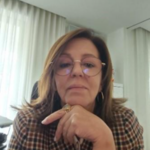
were developed in a preschool setting and incorporated research.Maria da Conceição Cerqueira Martins Vieira (1962) works at the Monserrate Preschool
(Teachers’ Council Coordinator).
She has been an Early Childhood Educator since 1984, having worked at various public kindergartens.
She holds a Master’s degree in Education—Master’s in Mathematics and Science Education—with a thesis
titled “Problem Solving and Creativity: A Study in the Context of Kindergarten”—UMinho
and the Viana do Castelo School of Education (ESE)
She holds a postgraduate degree in Child Studies, with a specialization in Teaching and
Learning Mathematics for Children Aged 4 to 12 – University of Minho
She completed the Supplementary Course in Scientific and Pedagogical Training for Early Childhood Educators
in the areas of Expression and Physical-Motor Education, Music, Drama, and
Visual Arts at the Viana do Castelo School of Education (ESE), which awarded her a bachelor’s degree.
She served as Deputy Director for two terms at the Monte da Ola School Group (TEIP)
(2014–2022)
She served as Intermunicipal Coordinator of the National Arts Plan (2023–2025)
She held positions at the Viana do Castelo Educational Area Center (CAE), where she
was responsible for the Preschool Education Expansion and Development Program in the
Alto Minho region. At this CAE, she also served as Strategic Coordinator for the Ministry of Education’s Alfa Program, which
aimed to address isolation and encourage the organization of schools into
school clusters.
She served as a representative of the Ministry of Education on the Commission for the Protection of Children and
Youth in the municipality of Viana do Castelo.
She has completed the Trainer Training Course offered by the General Directorate for Innovation and
Curriculum Development of the Ministry of Education—training related to the support brochures forCurricular Guidelines for Preschool Education, having led various
training sessions throughout the country.
She is an accredited trainer by the Scientific Council for Continuing Education.
She served as a Visiting Professor at the School of Early Childhood Education (ESE) in Viana do Castelo.
She served as Department Coordinator and member of the
Pedagogical Council at the Vale do Âncora and Monte da Ola School Districts.
She was a member of the School District Self-Assessment Team (PAR) at the
Monte da Ola School District.
She is a member of the governing body of the Association of Early Childhood Education Professionals
(APEI).
She has published several articles in the proceedings of conferences and meetings.
She has organized and participated as a speaker in various conferences, congresses, lectures,
posters, and roundtable discussions. -
Workshop 10 - A Piece of Heaven Inside the Classroom: The Handmade Planetarium as a Teaching Resource in Preschool and Early Elementary Education (groups 100, 110, 120, and 910)
Sandra Vasconcelos and Isabel Tomázio Correia (APEI)
Bringing a piece of the sky into the classroom creates space for children’s curiosity to encounter the universe. Astronomy makes‑a starting point for experiences in inquiry, construction, and discovery that bring children closer to celestial phenomena and scientific practices. In this training session, exploring the sky—through light, shadow, movement, patterns, and modeling—is seen as a unique opportunity to develop scientific literacy from an early age, incorporating accessible and meaningful STEAM approaches.
The proposal includes the construction and operation of a handmade planetarium, allowing for the modeling of celestial movements using simple materials that can be adapted to different educational contexts. It involves—also incorporates contributions from the D.O.M.E. project project, developed in collaboration with NUCLIO, which promotes immersive environments, observational experiences, and digital resources that expand the possibilities for research and discovery.
Adds value‑the creation of inclusive educational environments capable of accommodating different learning paces and styles, promoting rich and culturally relevant experiences. Astronomy emerges as an integrative field that fosters observation, inquiry, and the development of explanations, contributing to the development of essential skills throughout a student’s schooling. The proposal emphasizes participatory and collaborative teaching practices, reinforcing the role of science education in building sustainable futures.
Objectives:
– Explore simple astronomical phenomena—light, shadow, and apparent motion—through hands-on observation and experimentation, fostering curiosity, inquiry, and scientific literacy;
– Build and use a homemade planetarium and other accessible models as teaching resources to support the understanding of celestial motions and scientific explanations in an educational setting;
– Plan and adapt astronomy activities to different educational contexts, incorporating simple materials, inclusive strategies, digital resources, and STEAM approaches that expand opportunities for participation and discovery.
Methodology:
The methodology combines elements of hands-on exploration, collaborative learning, and pedagogical reflection, with astronomy as its central theme. The session begins‑with simple observation and experimentation activities that allow participants to explore fundamental astronomical phenomena—light, shadow, and apparent motion—using accessible materials and strategies that encourage inquiry and questioning. Participants experience these practical activities as scientific experiments that can be applied to the educational context.
Continue‑is the construction of a handmade planetarium, designed as an educational resource to support the understanding of celestial movements. During this stage, participants work with materials, build models, and experiment with different ways of representing astronomical phenomena, analyzing the educational potential of each proposal. The exploration of the planetarium is accompanied by guided experimentation sessions, during which participants discuss ways to adapt the activities to children of different ages, learning styles, and needs.
The session also includes an analysis of inclusive strategies and STEAM approaches that emphasize active participation and the development of scientific explanations. Examples of digital resources and immersive environments—including contributions from the D.O.M.E. project—are presented, which expand the possibilities for exploration and discovery, allowing participants to reflect on the balanced integration of simple materials and accessible technologies.
Finally, it promotes‑a moment of collaborative reflection, during which participants analyze the pedagogical potential of the activities they have experienced and plan ways to adapt them to their educational contexts. This moment includes a discussion on organizing the learning environment to support scientific inquiry, reinforcing the importance of space as an element that fosters curiosity, autonomy, and knowledge construction.
-
Workshop 11 - Passarada: Transdisciplinary Dialogues (Elementary and Secondary Education)
Teresa Eça and Leonel Seroto Rocha
Graphic records and illustrations using natural pigments are at the origin of the visual arts: handprints made with iron-oxide-rich earth in prehistoric caves; paints made from rocks and calcined bones in the frescoes of the pyramids of Ancient Egypt; Buddhist temples in India, Tibet, and China; the painted houses of Sudan; ritual objects from the First Nations of North America; and those of the Aboriginal peoples of Australia. In this workshop, we will explore illustration, focusing on the theme of birds of Portugal, using mineral and plant-based materials as a foundation for a discussion on interdisciplinary connections.
Workshop Objectives:
- Reflecting on transdisciplinary connections: Exploring transdisciplinary teaching strategies through drawing to foster curiosity, critical thinking, and environmental awareness.
- Propose Creative Solutions: Encourage participants to think and create using visual tools and techniques.
During the workshop, participants will be encouraged to engage in a dialogic reflection on transdisciplinary possibilities or ways of linking different disciplines.
Accredited as a short-term activity (6 hours), pursuant to Order No. 5741/2015, dated May 29